
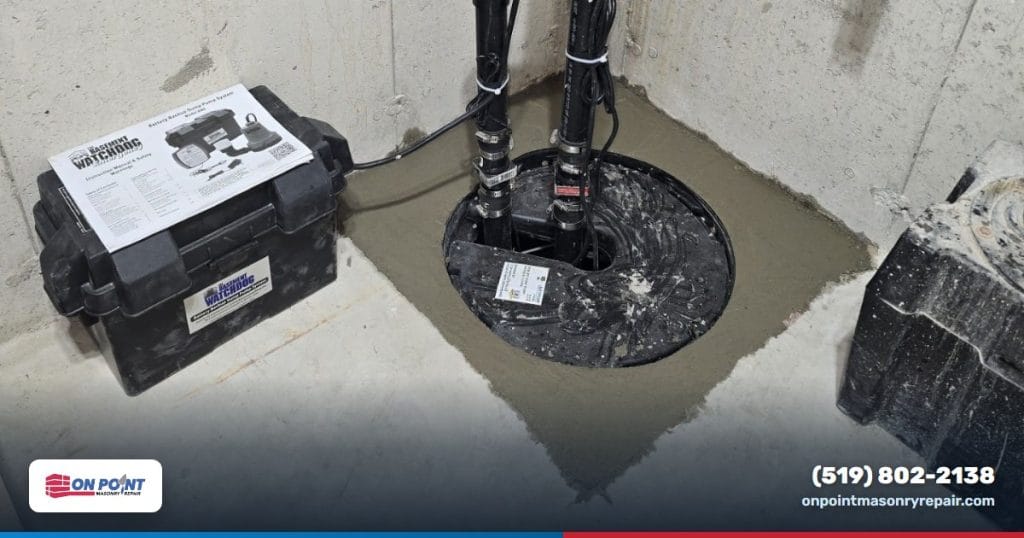
The short answer
Test your sump pump at least twice a year, ideally before the spring melt. Pour a pail of water into the pit and watch the float rise, the pump empty it and shut off, then check the discharge outside. When a pump acts up, the usual culprits are the float switch, check valve or power, not the motor.
Most sump pumps don't fail in the storm. They fail quietly in a dry month when nobody is looking, and the storm is just when you find out. The checks that catch most of it take about ten minutes and a pail of water.
Here's the spring check we'd do on our own house, a straight table for a pump that runs constantly, beeps or won't start, and an honest take on when a repair is worth paying for.
Last updated:
The 10-minute sump pump maintenance check
Do it in March, before the snow goes, and again in the fall. The Intact Centre on Climate Adaptation at the University of Waterloo puts a sump pump test on its list of maintenance to do at least twice a year.
- Unplug it and look in the pit. Clear out gravel, silt or a tangled cord. A float jammed against the pit wall is the classic dead pump.
- Plug it back in and add water. Pour a pail in slowly. The pump should start on its own, draw the water down quickly and shut off cleanly.
- Listen. A steady hum is normal. Grinding, rattling, or humming without moving any water is not.
- Watch the check valve. If water rushes back into the pit when the pump stops, or the pump restarts a minute later with nothing new coming in, the valve has failed.
- Check the discharge outside. The pipe should be clear and uncrushed, and the Intact Centre's guidance is to put that water at least 2 metres from the foundation.
- Check the power. No extension cords, and if a GFCI outlet trips more than once, call an electrician rather than finding a workaround.
- Test the alarm and the backup. Press the alarm's test button, test a battery backup the way our battery backup guide lays out, and write the date on the lid.
If every step passes, you're done until the fall. If one fails, the table below tells you what it usually means.
Cleaning the pit and the pump
Once a year is plenty for most pits. Unplug the pump, scoop or shop-vac the sludge and gravel off the bottom, and if the pump lifts out easily, hose off its intake screen outside. There's nothing worth pouring into a pit to clean it, and bleach or drain cleaner just gets pumped onto your lawn.
If it silts up again within a season, or you find orange slime, that's coming in through the drainage, and it's worth reading up on the ways weeping tile fails before it gets worse.
Symptom, cause, fix
Start with the cheapest explanation and work up.
| What you're seeing | Usually means | What to do |
|---|---|---|
| Runs constantly in dry weather | A stuck float, a failed switch, or a check valve letting water fall back | Free the float, then watch the valve after the pump stops |
| Runs a lot in the spring melt or heavy rain | Usually just doing its job | Normal for a few days. If it never lets up, the pump may be undersized |
| Starts and stops every minute or two | Short cycling: a small pit, a float set too low, or a bad check valve | Reset or replace the switch, fix the valve, or fit a larger basin |
| Beeping | High water in the pit, or a backup controller reporting a problem | Check the water level first, then the controller's lights |
| Won't start as the water rises | No power, a stuck or failed float switch, or a dead motor | Check the plug, breaker and GFCI, free the float, then test with a pail |
| Hums but moves no water | A clogged intake, a jammed impeller, an airlock, or a frozen or blocked discharge | Unplug it, clean the intake and clear the discharge; call if it still hums |
| Grinding or rattling | Worn bearings or debris in the impeller | Clean it. If the noise stays, plan on a new pump |
| Pit stays dry through a wet spring | Water isn't reaching the pit | If the basement gets wet anyway, suspect blocked drainage |
Why your sump pump runs constantly
First question: is water actually coming in? Watch the pit after the pump shuts off. If it refills steadily, the pump is doing its job, and in dry weather that usually points to a high water table, overloaded drainage or a plumbing leak finding its way to the pit. Our guide to why basements get wet helps tell those apart.
If the pit stays low and the pump keeps running, it's mechanical. A float snagged on its cord or wedged against the wall holds the switch on. A failed check valve lets the water in the pipe drop back after every cycle, so the pump keeps moving the same water. Fix either one quickly, because a pump that never rests is wearing itself out.
Why it's beeping: the alarm and the backup
A sump system beeps for one of two reasons, and the first is urgent. A high-water alarm means the water has risen above where the pump should have cleared it, because the pump has stopped, lost power or can't keep up.
The second is a battery backup controller. Depending on the model, it beeps when the power is out, after the backup pump has run, or when the battery or charger needs attention. Check the pit first, then the controller's lights, then the manual. Silencing it without finding out why is how people end up with a dead backup in April.
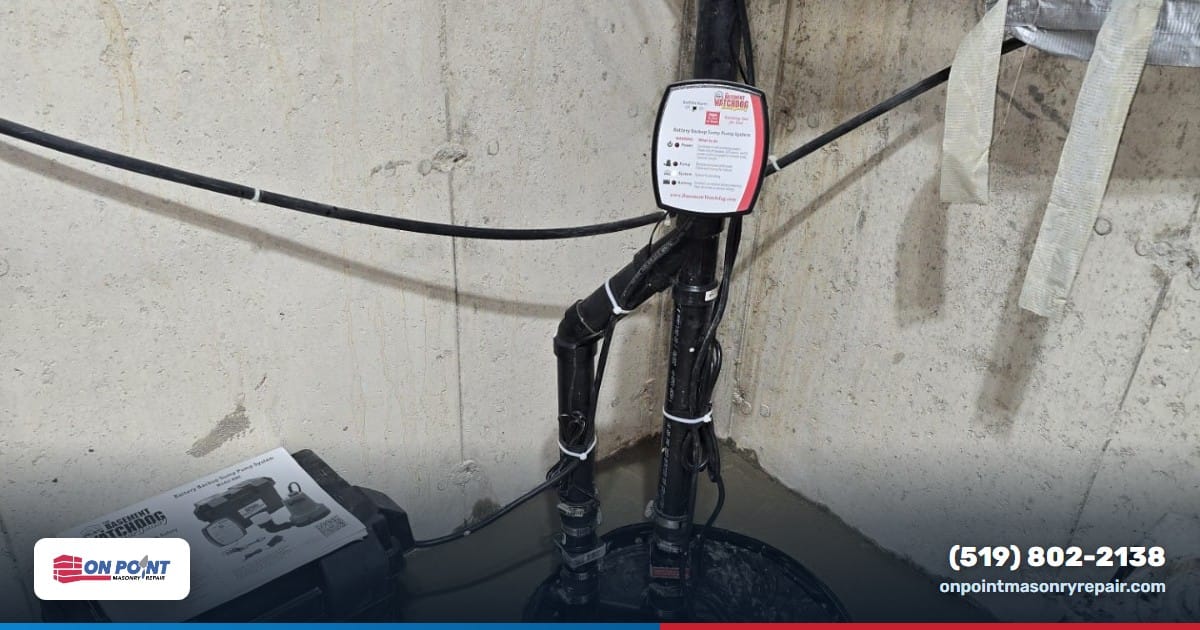
Sump pump not working? Power, float switch or motor
Work from the outlet in. Is it plugged in, and has the breaker or the GFCI tripped? Reset a GFCI once, and if it trips again, call an electrician. Then check the float, because a float that's stuck, tangled or leaning on the pit wall can't start the pump, and a pump that runs once the float is free was never broken.
If you have to shake the discharge pipe to get the pump going, Zoeller's product support page is blunt: the switch is malfunctioning. It puts average switch life at 4 to 7 years, shorter than the pump's, and a float that moves freely without starting the pump points the same way.
A pump that hums but moves no water usually has a clogged intake, a jammed impeller or an airlock. A small relief hole in the pipe between the pump and the check valve is what prevents the airlock. If it has power and a working switch but stays silent, the motor is done.
Repair or replace?
Most failures are fixable without a new pump: a float switch, a check valve, a clogged intake and a crushed discharge line are all repairs. Age is what changes the math.
So how long do sump pumps last? Zoeller says its pumps are designed for a 7 to 10 year service life under normal conditions, and InterNACHI's life expectancy chart lists a sump pump at seven years. A failed switch on a three-year-old pump is a repair, but the same failure on a nine-year-old pump is your cue to replace the whole thing before the motor follows.
Do you need a plumber? Not for a straight swap in an existing pit, which is routine work for us. A water-powered backup on city water or a tie-in to a drain is licensed plumbing work, and a new circuit is an electrician's, so we bring in the licensed trade for those parts.
Our sump pump repair and replacement page covers how we diagnose a pump, and the quote is always free, written and itemized.
Don't forget the battery backup
A backup pump sits idle until the night it matters, so test it twice a year with the primary unplugged and plan on a new battery every four to seven years. Our guide to battery backup sump pumps covers runtime, cost and the test itself.
No backup yet? In Paris and the rest of the County of Brant, the County pays 50% of eligible costs up to a $5,000 lifetime maximum for new systems in homes built before 2012, with insurance-claim documentation. The City of Brantford's program, which has paid 80% of eligible costs up to $5,000 with battery backups included, is paused to new applications right now, so check brantford.ca for when it reopens.
Hamilton's $2,000 program covers a sump pump only when it goes in with a backwater valve, and it doesn't cover battery backups. Check current terms before you buy anything, because these programs change and funding is first-come, first-served. The details are in the grants section of our battery backup guide.
What a new pump costs
If it does come to a new pump, these are the typical southwestern Ontario ranges from our sump pump installation cost guide, not our prices.
| Job | Typical Ontario range | What drives it |
|---|---|---|
| New pump in an existing pit | Roughly $500–$1,200 | Mostly the pump you choose |
| New pit, pump and discharge line | Roughly $1,500–$3,500+ | Breaking the slab and how far the discharge has to run |
| Adding a battery backup | Roughly $1,000–$2,500 | The backup pump, battery and controller |
Our own number comes as a free written itemized quote after we've seen the pit, and our sump pump installation page explains how we size a new system.
Common questions
Does a sump pump require maintenance?
Yes, but not much. Test it at least twice a year by pouring water into the pit, clean the pit and the intake screen about once a year, and make sure the discharge outside is clear.
How can I test my sump pump?
Pour a pail of water into the pit until the float rises. The pump should start on its own, empty the pit quickly and shut off, with no water rushing back down the pipe. Then go outside and confirm the water is coming out of the discharge.
Why is my sump pump running constantly?
Either water keeps coming in or something is holding the switch on. If the pit refills after the pump stops, you have a water source to find. If it doesn't, look for a stuck float or a failed check valve.
Why is my sump pump beeping?
Usually because the water is higher than it should be, or because a battery backup needs attention. A high-water alarm means the pump has failed, lost power or can't keep up, so check the pit right away. Otherwise, read the lights on the backup controller.
What is the most common reason for sump pump failure?
The float switch is the usual suspect, because it wears out sooner than the pump: Zoeller puts average switch life at 4 to 7 years, against 7 to 10 for the pump. After that, check the power, the check valve, the intake and the discharge line.
What is the typical lifespan of a sump pump?
Plan on 7 to 10 years for a typical submersible. That's the service life Zoeller designs its pumps for, and InterNACHI's chart says seven. Pumps that run constantly or sit in silty water wear out sooner.
Is it worth repairing a sump pump?
Yes, if the pump is fairly young and the fault is the switch, the check valve, the intake or the discharge line, because those repairs cost a fraction of a new pump. On a pump seven years or older, or one with a burnt-out motor, replace it.
How much does it cost to replace a sump pump?
In southwestern Ontario, a new pump in an existing pit typically runs $500 to $1,200 all-in. A brand-new installation with a pit, basin and discharge line is more like $1,500 to $3,500 or more, and a battery backup runs $1,000 to $2,500.
Pump acting up, or not sure it would start?
We'll test the pump and the backup and tell you straight whether it needs a part, a new pump or nothing at all. If the real problem is water getting in somewhere else, we'll say so, and every quote is free, written and itemized.
Call (519) 802-2138Free assessments across Paris, Brantford, Brant County, Hamilton, Cambridge, Kitchener, Waterloo, Guelph, Woodstock and Simcoe.
More on the work behind this: sump pump repair and replacement, new sump pump installation, and basement leak repair or interior waterproofing when the water in your pit is a symptom of something bigger.