
A wet basement almost never has a mysterious cause. There are about seven things that do it, and you can usually narrow it to one or two by paying attention to when the water shows up and where it appears first. Here's the list we work through on real jobs across Paris, Brantford and southwestern Ontario, starting with the cheapest thing it might be — because it very often is.
Last updated:
What causes a wet basement? Start with the symptom
Before anyone quotes you anything, this table gets you most of the way to a diagnosis.
| What you're seeing | Usually means | Where to look first |
|---|---|---|
| Wet only during and after heavy rain | Surface water reaching the foundation | Downspouts, grading, window wells |
| A wet streak down one spot on the wall | A crack letting water through | That wall, floor to ceiling |
| Water along the base of the wall, on the floor | Pressure pushing water up at the cove joint | Drainage, weeping tile |
| Damp everywhere, no obvious source, worse in summer | Condensation, not a leak | Humidity, cold surfaces, dryer venting |
| White chalky powder on the wall | Efflorescence — water has been moving through the concrete | Whatever is behind that wall |
| Wet in dry weather too | Groundwater or a plumbing leak | Water meter, supply lines, water table |
1. Roof water and grading
Start here, always. A roof sheds an enormous amount of water, and a downspout emptying beside the wall puts all of it straight down against your foundation. Add ground that has settled over the years and now slopes gently back toward the house, and you've built a funnel.
Extend the downspouts six feet out, clear the gutters, and build the soil back up so it falls away from the wall. It's the cheapest fix on this page by a wide margin, and it genuinely resolves a share of the "leaking basements" we get called to look at. If someone quotes you excavation without walking the outside of your house first, get another quote.
2. A crack in the foundation wall
The classic: a single wet streak running down one part of the wall, worst during rain. Water gets into a crack, travels through the concrete and comes out somewhere lower and slightly to one side, which is why the wet patch is often not directly below the crack.
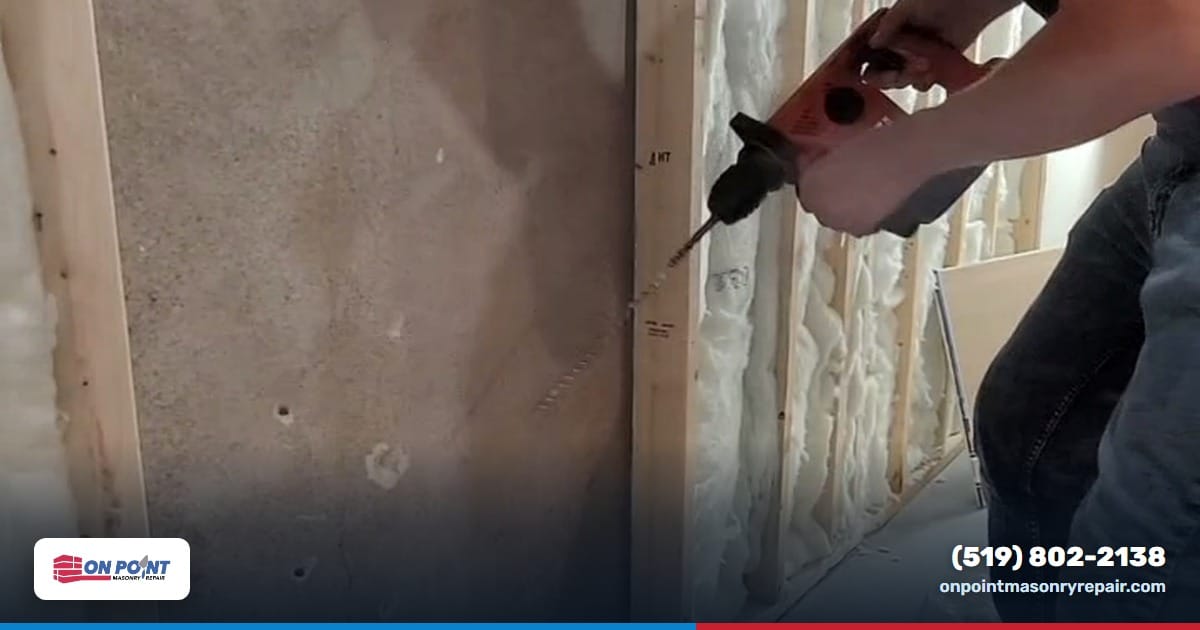
A leaking crack is one of the cheaper repairs there is — injected from inside in a single visit, no digging. We covered what that costs and which cracks are worth worrying about in the foundation crack repair cost guide. The one exception: a horizontal crack is a different conversation, and it isn't a sealing job.
3. Water pushing up at the floor-wall joint
If the water appears along the base of the wall where it meets the floor, rather than running down from above, that's the cove joint. It means the water table around your footing has come up high enough to push water in from underneath. Hydrostatic pressure, in other words.
You cannot caulk this away. Sealing the joint just makes the water find the next weakest point. The fix is drainage: either an interior system that catches the water and routes it to a sump, or exterior waterproofing that stops it before it reaches the wall.
4. Window wells filling up
A window well with a blocked drain is a bucket sitting against your basement window. It fills during a downpour, the water rises above the frame, and in it comes. People often blame the window when the well is the problem.
Clear the drain at the bottom, top up the gravel, and fit a cover. Another cheap one, and easy to check yourself — go out during the next heavy rain and look.
5. Weeping tile that's failed or clogged
Weeping tile is the perforated pipe running around the outside of your footing, and its whole job is to collect groundwater and carry it away before it can press against the wall. On older southwestern Ontario homes it's often clay tile, and after fifty or sixty years it silts up, gets crushed, or fills with roots.
When it stops draining, the water it used to carry away stays against your foundation, and a basement that was dry for decades starts getting wet. This is the cause people rarely suspect, because nothing visible changed. It's also why an older house that has suddenly turned wet deserves a proper look rather than a tube of sealant. Here's how to tell if your weeping tile has failed.
6. Condensation, which isn't a leak at all
This is the one that gets misdiagnosed most, and it's the answer to "why is my basement floor wet but there's no leak?" Warm humid summer air meets cold concrete and moisture condenses onto the wall and floor, exactly the way it beads on a cold glass. Damp everywhere rather than in one spot, worst in July and August, better in winter. That's condensation, not groundwater.
Here's the simple test. Tape a square of plastic sheet tightly to the concrete and leave it a couple of days. Moisture on the outside of the plastic means humid air condensing, which is a dehumidifier and ventilation problem. Moisture underneath means water is coming through the wall, which is ours. Check that your dryer vents outside while you're down there.
7. A plumbing leak in disguise
If the basement is wet in genuinely dry weather, with no rain for a week, stop blaming the foundation. A weeping supply line, a failing hot water tank or a slow drain leak all look exactly like groundwater once the water reaches the floor.
Easy check: turn off every tap and water-using appliance in the house and watch the meter for an hour. If it moves, you need a plumber, not a waterproofer. We'd rather tell you that than sell you a system that won't fix it.
Wet basement questions
Why is my basement floor wet but no leak?
Usually condensation. Warm humid air hits cold concrete and moisture forms on the surface, so the damp is spread out rather than in one spot and it's worst in summer. Tape a square of plastic sheet to the floor for two days: moisture on top of the plastic means humidity, moisture underneath means water is coming through the slab.
Is it normal to have water in the basement after heavy rain?
Common, but not normal, and not something to live with. Water after rain means surface water is reaching your foundation, or the ground around it is saturating faster than it drains. Start with downspouts, grading and window wells, because those are cheap. If it keeps happening after that, the problem is below ground.
What should I do first if my basement is wet?
Protect your stuff, then find the source. Move belongings off the floor, get standing water to a drain or a wet vac, and run a dehumidifier. Then check the cheap causes first, the downspouts, grading and window wells, before anyone quotes you a system.
What happens if you don't fix a wet basement?
It gets more expensive rather than staying still. Persistent moisture wrecks finishes and stored belongings, feeds mould, and rusts anything metal down there. Water moving through concrete also carries minerals out of it over time. And an unresolved water issue costs far more in a home sale negotiation than the repair would have.
How do you fix a wet basement from the inside?
Match the fix to the cause. A leaking crack gets injected from inside in one visit. Water at the floor-wall joint needs interior drainage routed to a sump. Condensation needs a dehumidifier and better ventilation, not waterproofing at all. Interior work handles most wet basements, but if the exterior membrane or the weeping tile has failed, no interior fix substitutes for sorting that out.
Not sure which of the seven you've got?
That's the part worth getting right, because the fixes range from a $20 downspout extension to a full drainage system, and picking wrong means paying twice. We'll come look, tell you which one it is, and say so plainly if it's the cheap kind you can sort out yourself.
Call (519) 802-2138Free written assessments across Paris, Brantford, Brant County, Cambridge, Kitchener, Waterloo, Guelph, Hamilton, Woodstock and Simcoe — or read more about basement leak repair and basement waterproofing.